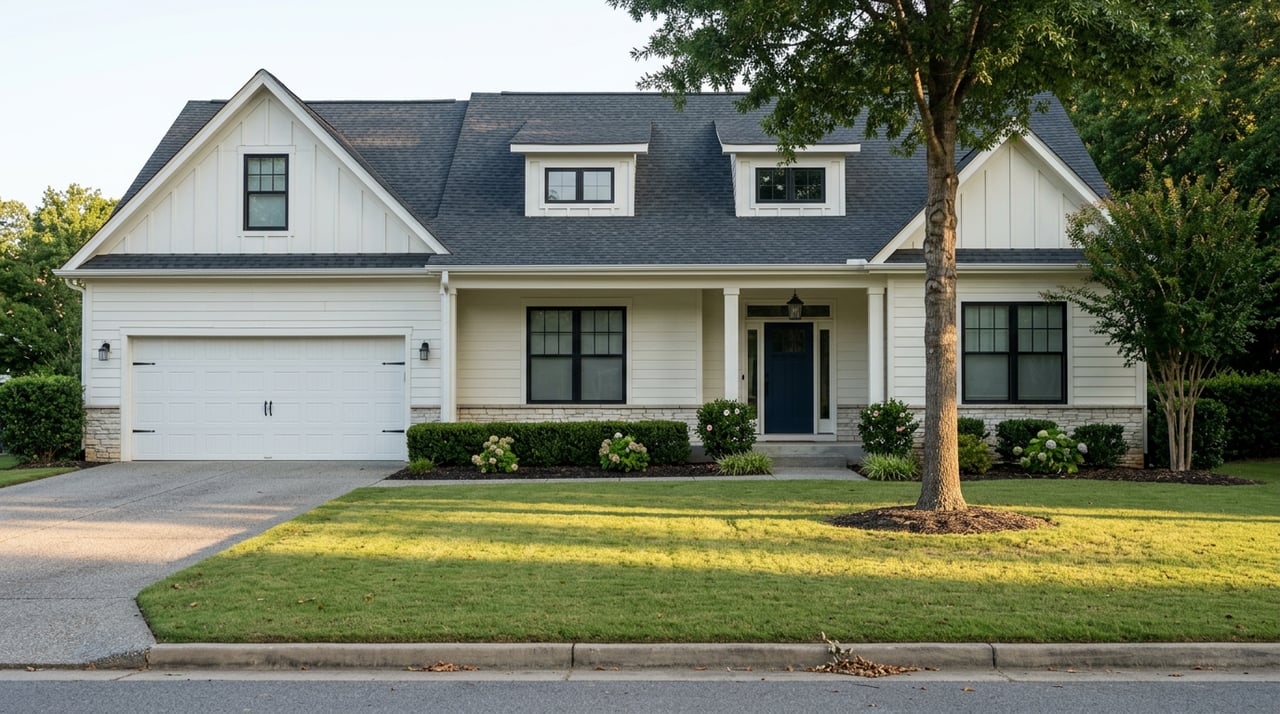
A couple sits in a builder's design center in Fort Mill, picking out cabinet finishes for a home that won't exist for another nine months. The sales rep slides across a sheet showing a rate buydown and a few thousand dollars in closing cost credit if they use the builder's preferred lender. It feels like a deal. What the sheet doesn't show is the $29,640 the builder already had to pay just to get a permit for that lot, a fee that a resale home three streets over in an established section never touches.
That gap is the thing worth understanding before anyone in Fort Mill signs a new construction contract in 2026.
The Fee That Only Attaches to New Construction
Since July 1, 2025, every new single-family home permitted inside the Fort Mill School District carries a school impact fee of $29,640, with multi-family units assessed at $20,796 per unit. York County Council approved the increase in April 2025, and the ordinance took effect that summer. The York County government's impact fee page confirms the figures directly, and the number is not a rounding artifact. Reporting at the time put Fort Mill's fee at roughly six times South Carolina's statewide average, and higher than the average development impact fee in California, a state whose fees are otherwise the highest in the country.
The mechanics matter as much as the number. Impact fees are one-time charges collected when a building permit is issued for new construction. A resale transaction does not trigger a new permit, so it never generates this charge. That single distinction is why two homes with similar list prices in Fort Mill are not actually the same purchase once you look past the sticker.
"What this does is it shows what the value of the Fort Mill School district is. It's worth $30,000 on a house."
That's Councilman Andy Litten, defending the fee around the April 2025 vote. Not everyone agreed. Homebuilders Association CEO Mark Nix pushed back publicly, arguing the growth projections used to justify the fee were overstated. Councilman Bump Roddy called the fee exorbitant and argued there had to be a better way to fund growth than adding $30,000 to every new single-family permit. The fee passed anyway, and it's the number every builder in the district has priced into their spec sheets since.
Where the Money Is Actually Going
The fee exists because the district has been building faster than most in the state. As of a May 2026 school board meeting, cumulative impact fee collections stood at $83,691,572 across 5,228 units, split between 2,996 single-family homes and 2,232 multi-family units, with April 2026 alone contributing $341,100. Assistant Superintendent Leanne Lordo told council in early 2025 that Flint Hill Elementary, which opened that August, would be paid for entirely through impact fee revenue with no bonded debt attached.
That's a real trade for the district. It's also a real cost embedded in every new-build closing statement, and it's one resale buyers simply skip.
The Building Pause Nobody Priced In
The fee landed at the same moment Fort Mill hit the brakes on new residential approvals, and the timing compounds the effect rather than offsetting it.
In mid-2025, the town froze most residential rezoning and annexation applications through the end of the year, a pause explicitly timed to precede the new fee's July 1 start date. That moratorium expired on schedule, but the town didn't stay open for long. On March 23, 2026, Fort Mill Town Council formally adopted its "Our Path Forward" Comprehensive Plan and a new Downtown Master Plan, two years in the making, and immediately followed that vote with a fresh moratorium on new residential rezonings, annexations, and preliminary plats. That pause runs through September 30, 2026, with a possible 90-day extension by council resolution. You can read the town's own account of the plan on its Our Path Forward project page.
The moratorium isn't blanket. Projects with prior council approval, active review status, or a submitted traffic impact analysis are exempt, which is why construction hasn't stopped across town. But new proposals are stuck until staff finishes rewriting zoning code to match the new comprehensive plan.
The Arden Mill project is a useful example of what that looks like in practice. Part of the community already has homes listed for sale through Classica Homes, with individual units priced from roughly $415,000 to $654,000 in 2026. But developer Trip Point had a Phase 2 annexation and rezoning request in front of council at that same March meeting, and asked for a deferral to cut the proposed unit count from 108 homes down to approximately 80 or fewer. Planning Director Penelope Karagounis confirmed the request was about reducing density and increasing open space, not abandoning the project. Council didn't vote on it that night. That's the moratorium era in miniature: existing pipeline keeps moving, new proposals get slower and smaller.
New Construction vs. Resale, Line by Line
| New Construction | Resale | |
|---|---|---|
| School impact fee | $29,640 per unit, built into price | Not applicable |
| Permitting path | Subject to moratorium unless already approved | Not applicable |
| Builder incentives | Rate buydowns, closing credits, upgrade packages | Negotiated price or seller concessions |
| Timeline | Typically 7 to 12 months from contract to close | Weeks, depending on financing and inspection |
What This Means If You're Weighing a New Build Against a Baxter Village Resale
Put the fee and the moratorium together and the picture for anyone comparing a new build to an established-neighborhood resale in Fort Mill gets clearer. New construction is carrying a cost that didn't exist two years ago, at the same time the town has deliberately narrowed the pipeline that would otherwise compete that cost away. A resale in an established section of Baxter Village that was built and permitted years before the fee existed carries none of it, and it isn't waiting on a zoning rewrite to close.
That doesn't make new construction a bad choice. DRB Elevate's Brook Run community and OZ Custom Homes' Wisteria Meadows are both active examples of builders still selling in Fort Mill, alongside broader activity from builders like Lennar, Meritage Homes, and David Weekley Homes elsewhere in the district. For buyers who want a specific floor plan or the ability to select finishes, new construction still has a real case. But the incentive credit on the sales sheet needs to be read for what it is: a partial offset against a fee unique to that transaction, not free money layered on top of an otherwise identical price. A $10,000 closing credit against a $29,640 fee still leaves the new-build buyer covering close to $20,000 that a resale buyer next door never sees.
Questions Worth Asking Before You Sign a Builder Contract
- Ask whether the quoted price already reflects the $29,640 impact fee or whether it will be added at closing.
- Ask what specific cost the incentive package is offsetting, and get that in writing rather than accepting a verbal estimate.
- Confirm whether the lot or plat has prior approval that exempts it from the current moratorium, since that affects both timeline and any risk of the project stalling.
- Compare that all-in number, fee included, against two or three resale listings in the same school zone before deciding.
- If a lender is bundled with the builder incentive, get an independent rate quote to confirm the buydown is actually saving money rather than being priced into the home.
A Few Direct Questions
Does the fee apply if I buy a spec home that was permitted before July 1, 2025? No. The fee attaches at the time of permit issuance, not closing. A home permitted before that date under the ordinance's transition terms is not retroactively charged.
If I buy a resale home that was originally new construction after July 2025, do I pay the fee again? No. The fee is a one-time charge paid by the original builder or developer at permit. It is not reassessed on a later resale.
Will the current moratorium stop a project I'm already touring in a builder's model home? Likely not, if that community already has an approved plat or is under active review. The moratorium targets new rezoning, annexation, and preliminary plat applications, not homes already permitted and under construction.
Fort Mill's growth is real and the school district's case for the fee is grounded in actual enrollment pressure. None of that changes the math a buyer needs to run before choosing between a builder's contract and a resale listing. If you want that comparison run against actual current inventory in Fort Mill, Josh Tuschak can walk through the numbers on a specific new build or resale you're considering and help you see what the incentive package is really offsetting before you sign anything.