Heavy Carolina rain can turn a small drainage issue into a big repair bill. If you own or plan to buy a home in Rock Hill, understanding stormwater fees and how your yard is graded helps you avoid surprises at closing and after you move in. You also have options to reduce runoff, protect your foundation, and even earn fee credits when you maintain approved systems. This guide breaks down how Rock Hill bills for stormwater, when permits apply, and practical yard fixes that work in our area. Let’s dive in.
How Rock Hill stormwater fees work
Rock Hill operates a municipal stormwater program that funds drainage maintenance and water quality improvements. The city groups properties for billing and explains the methodology on its stormwater fees page. Residential parcels under a certain size are billed differently from nonresidential parcels, which are based on measured impervious area such as roofs and driveways. You can review billing methods and the fee credit program on the city’s page for stormwater fees and credits.
The city is an MS4 community, which means it manages stormwater through education, construction oversight, and post-construction maintenance. You can learn more about enforcement and reporting drainage problems on the city’s MS4 program page.
Fee credits you can pursue
Rock Hill offers stormwater fee credits for properties that install and maintain approved best management practices, often called BMPs. Credits and documentation requirements are explained in the city’s stormwater fees and credits materials. Credits are not automatic, and maintenance is required to keep them.
Permits and grading rules
Yard grading and drainage work is regulated locally and at the state level. South Carolina DHEC oversees construction stormwater permits for projects that disturb 1 acre or more. Smaller projects still need proper controls and may require local permits. For state thresholds and forms, review SCDHEC’s page on construction stormwater and NPDES permits.
Locally, Rock Hill reviews grading and stormwater plans and conducts inspections. The city’s permitting hub outlines when you need a building or grading permit, including for retaining walls and other structures. Start with Permitting & Inspections, and use the City’s detailed Stormwater Management and Erosion Control Checklist to understand submittals and land-disturbance fees referenced in local documents.
What typically triggers a permit
- Significant regrading that changes drainage patterns on your lot.
- Retaining walls above certain heights or supporting loads, which may require engineered plans.
- New or expanded driveways, patios, or other hard surfaces that affect site drainage.
- Any project near protected areas or that could discharge to the public right of way.
Enforcement and inspections
Rock Hill can inspect sites, require corrective action, and issue violations for noncompliance with erosion or stormwater requirements. For concerns about illicit discharges or drainage problems, use the contacts on the city’s MS4 program page.
Smart yard grading that works
The goal is simple: keep water away from your foundation and manage runoff on your property without creating issues for neighbors or streets. Start with small, proven steps, then consider larger upgrades.
Quick fixes with big impact
- Ensure a gentle, positive slope away from the foundation for the first several feet.
- Extend downspouts to discharge onto lawn or garden areas, and use splash blocks to spread flow. The EPA’s homeowner guide covers simple options in its Soak Up the Rain actions.
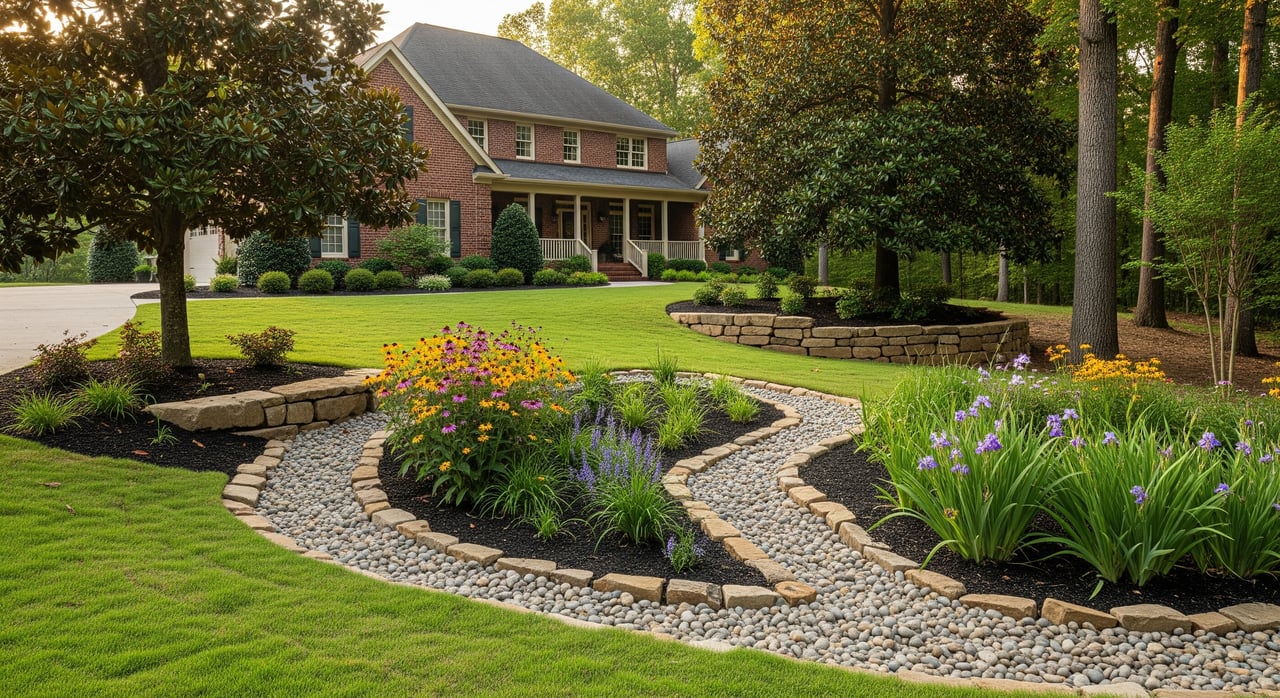
- Capture roof runoff in rain barrels or route it to a properly sized rain garden. Clemson Extension’s South Carolina guide shows how to design a Carolina rain garden with local plants and soils in mind.
Larger upgrades to consider
- Shallow grassed swales to move water safely across the yard while allowing infiltration where soils permit.
- French drains or dry wells sized for your soil and roof area, especially in low spots that stay wet.
- Permeable paving for parts of driveways or patios to reduce impervious area. Some BMPs may qualify for fee credits when designed and maintained per city guidance on stormwater fees and credits.
Maintenance matters
- Clean inlets, gutters, and downspouts after heavy leaf drop and big storms.
- Replant bare spots and stabilize slopes to prevent erosion.
- If you have a structural BMP, follow the maintenance schedule required by the city. Credits typically depend on proof of ongoing care per the stormwater fees and credits materials.
Buyer and seller checklists
Thoughtful grading and clear documentation reduce surprises during negotiations and inspections.
For sellers
- Gather permits and plans for grading, retaining walls, or drainage installations.
- Note any fee credits on your utility bill and keep maintenance records for BMPs.
- Disclose drainage easements, sump pump discharges, and areas that pond after rain.
- If repairs are planned before listing, review permit needs on Permitting & Inspections and align timelines with your sale.
For buyers
- During showings and inspections, look for positive slope away from the house, well-routed downspouts, and stable retaining walls.
- Walk the yard after a rain if possible to spot soggy areas or evidence of concentrated runoff from neighboring lots.
- Confirm flood risk with a FIRMette from FEMA’s Flood Map Service Center. Rock Hill’s Stormwater Study provides local basin insights that complement FEMA maps.
Closing steps and risk checks
- Before closing or repair escrows, confirm whether planned grading or hardscape work needs permits and inspections. Start at Permitting & Inspections and review the City’s Erosion Control Checklist.
- For projects that may disturb close to 1 acre, check state thresholds on SCDHEC’s construction stormwater page.
A well-graded yard protects your home, keeps neighbors happy, and can support lower lifetime costs when you maintain approved systems. If you want help timing improvements with a sale or assessing a yard before you buy, I’m here to guide you. Connect with Josh Tuschak to plan your next steps with clear, local advice.
FAQs
How are Rock Hill stormwater fees calculated for homes?
- The city groups parcels for billing and bases many charges on impervious area; residential parcels are handled differently from nonresidential. Review methods and credits on the city’s stormwater fees page.
Do rain gardens or rain barrels lower my Rock Hill fee?
- Some approved BMPs can qualify for stormwater fee credits if designed and maintained per city rules. See eligibility and application details under stormwater fees and credits.
When does yard work in Rock Hill require a permit?
- Significant regrading, certain retaining walls, and hardscape changes that affect drainage often need review. Start with the city’s Permitting & Inspections and the Erosion Control Checklist.
What if a neighbor’s grading sends water onto my lot in Rock Hill?
- Document the issue and contact the city for guidance through its MS4 program; the city can require corrective action when drainage impacts others.
How do I check flood risk for a Rock Hill home?
- Pull a FIRMette for the address at FEMA’s Flood Map Service Center and review local basin insights on Rock Hill’s Stormwater Study.