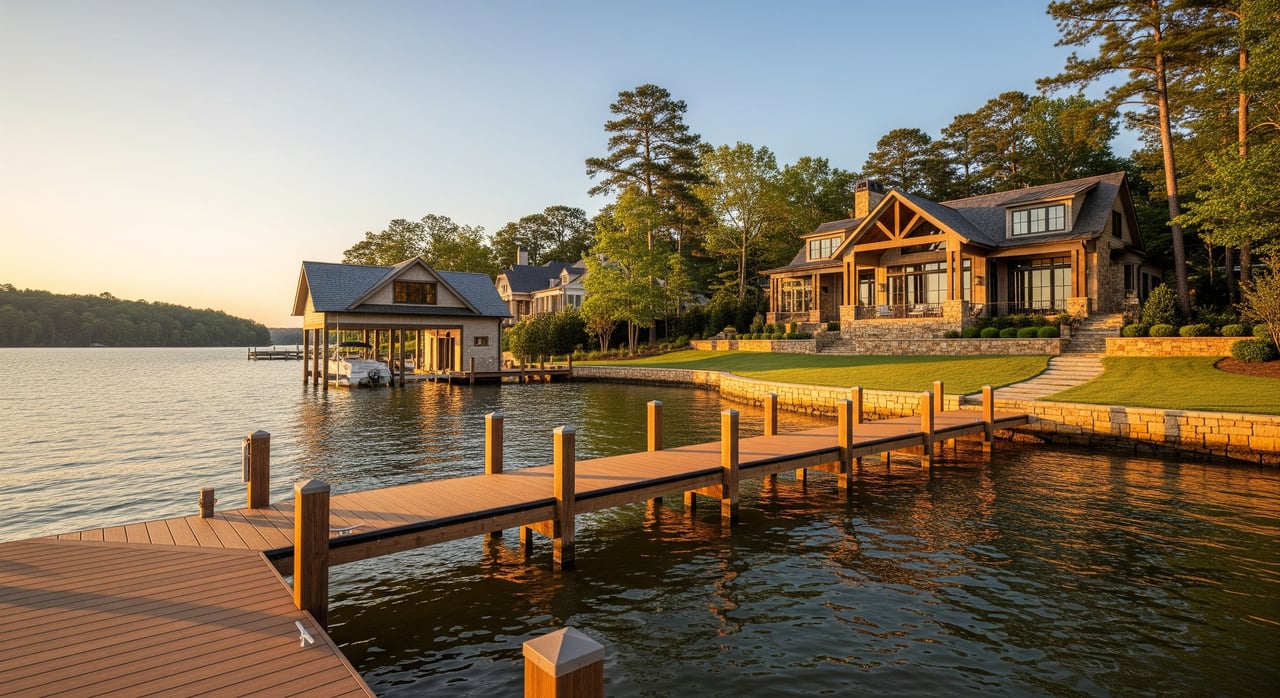
Are you trying to decide between a true waterfront home and a water‑view property on Lake Wylie? You are not alone. The difference affects price, permits, insurance, and how you live day to day. In this guide, you will learn how value works on Lake Wylie in York County, what rules matter for docks and shorelines, and the key steps to compare options with confidence. Let’s dive in.
What “waterfront” and “water‑view” mean here
On Lake Wylie, a waterfront lot typically touches the shoreline and may include deeded water access, riparian or littoral rights, and sometimes an existing dock. A water‑view home has a visual view of the lake but does not touch the water and may have no legal access.
There is also deeded or community access, which gives you rights to use the water through an easement or HOA common area even if your property is not directly on the lake. This is different from owning waterfront, but it can add meaningful value to a water‑view home.
Lake Wylie is a managed reservoir. Shoreline use, docks, and vegetation rules are shaped by the shoreline management plan historically overseen by Duke Energy. That plan, along with county and state rules, controls what you can build and how you maintain the shoreline.
How access and views translate into value
Why waterfront often commands a premium
Waterfront status is one of the strongest location-based value drivers. On Lake Wylie, the biggest contributors include:
- Dock quality and permits. Presence, condition, size, and permitted status of a private dock are major value points.
- Clear water rights. Deeded access and compliant shoreline rights increase marketability.
- Water depth and frontage. Deeper water and wider shoreline often mean better boating and higher value.
- Shoreline protection. Seawalls or riprap in good condition can reduce future costs and stress.
- Privacy and view corridors. Lot orientation, trees, and grade shape your daily view and privacy.
- Proximity to amenities. Nearness to marinas, ramps, and lakeside dining adds convenience many buyers pay for.
There is no single, fixed percentage premium that applies to every property. Appraisers rely on local comparable sales and adjust for lot, home, and shoreline features to value a specific address.
When a water‑view holds its own
A water‑view property can be the smarter buy if the view is strong and lasting:
- Permanence of view. Protected land between you and the lake can make a view more reliable over time.
- Elevation and sightlines. Higher lots with clean sightlines often feel like waterfront without direct access.
- Nearby access. Deeded or HOA water access close by can narrow the gap versus direct waterfront.
What can shrink a waterfront premium
Even on a lake, some factors can blunt or erase the expected premium:
- Uncertain permits. If you cannot obtain a dock permit or replace one under current rules, value may drop.
- Water quality issues. Persistent algae or invasive species reduce recreational appeal.
- Heavy boat traffic. Noise and wakes near busy channels can undermine enjoyment.
- Lake level changes. Reservoir drawdowns can affect docking and boating at certain times.
- Shoreline repair costs. Aging seawalls or erosion can bring expensive projects.
- Flood risk and insurance. Flood zone status and higher premiums increase carrying costs.
Lake Wylie rules you need to know
Shoreline management and docks
Private docks and shoreline work typically require approvals under the shoreline management plan, plus any county permits that apply. An unpermitted dock or one that does not meet current standards can be a liability. Expect ongoing maintenance and remember that dock ownership also brings safety and liability responsibilities.
Ownership lines and rights
On reservoirs, deeded ownership does not always extend to the water’s edge or the lakebed. Riparian or littoral rights can be limited by easements and shoreline rules. Always verify your deed, recorded plats, and any easements with a title search or real estate attorney.
Flood zones and insurance
Waterfront and low-lying properties may fall within FEMA Special Flood Hazard Areas. Lenders usually require flood insurance in those zones. Elevation certificates can help refine premiums. Older homes without compliant elevations may face higher costs, which can affect affordability and resale.
Environmental and septic
Many lakeside homes rely on septic systems. County health rules control system sizing, setbacks, and what you can add to a home. Stormwater management and erosion control may be regulated. Health and natural resource agencies can issue water quality or fish advisories that influence buyer perceptions.
Taxes and HOA factors
Waterfront parcels are often assessed higher than inland lots. HOA rules may govern docks, slips, vegetation, short-term rentals, and community water access. Review recent tax bills, assessor data, and HOA documents before you set a price or make an offer.
Pricing strategy for buyers and sellers
For buyers: evaluate a specific lot
- Pull recent local sales of similar homes with and without direct access to isolate the water premium.
- Compare dock status, water depth, frontage width, shoreline protection, and orientation.
- Obtain quotes for flood insurance and ask for dock and seawall maintenance records.
- Confirm permit history and likelihood of future approvals under shoreline rules.
- Factor in septic capacity and any limits on additions or bedroom count.
For sellers: set and defend your price
- Gather permits, plats, dock approvals, surveys, and maintenance records.
- For waterfront, consider a pre‑listing dock and seawall inspection to inform pricing and reduce renegotiations.
- For water‑view, document view protections and any deeded or community access.
- Build comps showing both waterfront and nearby water‑view sales to support your strategy.
Quick checklists
Waterfront buyer checklist
- Confirm legal water access in the deed or easements.
- Verify dock permits, condition, and replacement rules.
- Check FEMA flood zone status and get insurance quotes.
- Order a survey that shows shoreline boundaries and easements.
- Review shoreline rules for tree removal, seawalls, and docks.
- Inspect seawalls or riprap and estimate future costs.
- Assess water depth, seasonal drawdowns, and proximity to ramps or marinas.
- Ask about recent water quality advisories and invasive species.
- Verify septic permits and current system capacity.
Water‑view buyer checklist
- Confirm how permanent the view is and whether trees or future building could block it.
- Identify any deeded or HOA water access and how easy it is to use.
- Check flood zone status even if you are not on the shoreline.
- Think about long‑term resale and how you can maintain sightlines.
Seller checklist
- Assemble deeds, plats, surveys, dock permits, HOA rules, and maintenance logs.
- Disclose any shoreline or dock issues, including nonconforming items.
- Waterfront: confirm permit status or feasibility for replacements or upgrades.
- Water‑view: show view protections and community access to support your price.
- Prepare paired comps that highlight the water premium in your submarket.
Common scenarios on Lake Wylie
- Shallow cove vs strong view with access. A waterfront home on a shallow cove with limited docking may not outpace a nearby water‑view home that sits high with a protected view and easy community launch access. The details matter more than labels.
- Older home with an unpermitted dock. An unpermitted or noncompliant structure can delay closing or force remediation. Price should reflect permit risk and repair expense.
- Low‑lying lot in a flood zone. A true waterfront address in a Special Flood Hazard Area may require higher insurance and could carry elevation or mitigation needs. A higher‑elevation water‑view home might offer lower total cost of ownership.
Next steps
If you are weighing waterfront against water‑view, start with facts. Verify deeded rights and dock permits, check FEMA flood maps, review septic details, and ask for maintenance records. Then anchor price with local paired sales. If you are financing, fold flood and dock costs into your total monthly budget so the numbers match your lifestyle.
When you want a clear, mortgage‑informed game plan for buying or selling on Lake Wylie, connect with Josh Tuschak for a free valuation and strategy consult. You will get local comps, dock and shoreline guidance, and a step‑by‑step plan that fits your goals.
FAQs
On Lake Wylie, does waterfront guarantee a dock?
- Not always, because dock rights depend on deeded access, shoreline rules, and permits that must be verified.
How much more is waterfront worth than water‑view near Lake Wylie?
- It varies widely by lot, dock status, depth, frontage, and comps, so you should rely on recent local paired sales and an appraisal.
Do Lake Wylie buyers need flood insurance for waterfront homes?
- If a home is in a FEMA Special Flood Hazard Area, lenders usually require it, and quotes can vary by elevation and construction.
Who pays for seawall or shoreline repairs on Lake Wylie?
- Typically the property owner pays for private shoreline structures, subject to any easements, HOA rules, or shoreline management policies.
Can I trim or remove trees to improve my lake view?
- Tree removal on waterfront may be regulated, so check shoreline and county rules before trimming to avoid fines or restoration orders.